
For all of crypto's history, the price of moving money between chains was treated like the price of gravity. Of course you pay to bridge. You always have. A few basis points here, a few dollars there, and over a year of activity it adds up to a real number. Users learned to round it out of their thinking the same way they round out gas.
That assumption is finally cracking. Free bridging is no longer a marketing stunt or a one-off promotion. It's the direction crosschain is heading, and on Across, it's already live for a growing set of stablecoin routes. Send $1, receive exactly $1.
The interesting question isn't whether free bridging is technically possible. It's why it took this long, and why the user was ever the one paying in the first place.
Users Shouldn't Carry the Fee Burden
Bridging exists because chains don't talk to each other natively. That's a coordination problem between protocols and ecosystems, not a service the end user requested. Charging the user a fee to solve a coordination problem they didn't create is a strange place for the industry to have landed.
It happened because early bridges were expensive to operate. Capital had to be locked. Wrapped tokens had to be minted, redeemed, secured. Liquidity had to be incentivized. Someone had to pay for all of that, and the easiest someone to bill was the person clicking the button.
But the cost of bridging has collapsed. Native stablecoin standards eliminated the need for locked collateral on most major routes. Intent-based architectures replaced slow message passing with sub-2-second fills. Settlement got cheap. The infrastructure that was expensive in 2021 is closer to a rounding error in 2026.
When the cost goes to zero, the question of who pays becomes a design choice, not a math problem. And the design choice that makes the user pay is the wrong one.
Bridging Is Plumbing. Plumbing Should Be Invisible.
Think about how almost every other piece of internet infrastructure works. You don't pay a fee every time a packet crosses a router. You don't pay your DNS provider per lookup. You don't get charged when your email hops between servers on its way to an inbox. The infrastructure exists, it works, and the cost is absorbed somewhere upstream so the experience at the edge feels free.
Onchain has been doing the opposite. Every hop costs. Every chain switch costs. Every bridge transaction costs. The plumbing is visible because the plumbing keeps charging.
That's a bug, not a feature. Plumbing the user has to think about is plumbing the user has to route around, and routing around bridges is exactly what users have been doing. Staying on one chain longer than they should. Parking funds in wrappers to avoid double-bridging. Picking suboptimal venues because the optimal one was on the wrong network. Friction shapes behavior. A 30 basis point bridge fee is a quiet tax on every crosschain decision a user makes.
Free bridging removes the tax. The user picks the chain that's best for what they're doing, not the chain that's cheapest to reach.
Distribution Beats Tolling
There's an older idea in tech that explains this shift. The most valuable layer in any stack is rarely the one charging the most per transaction. It's the layer that captures the most distribution. Search engines didn't get rich charging users to search. Routers didn't get rich charging packets. The companies that won the internet built free at the edge and made their money on the activity that free edge created.
Bridges have spent four years trying to be tollbooths. Tolls work when you're the only road. The moment you have competition (and crypto has competition between chains, between bridges, between rollup ecosystems), the tollbooth becomes the bottleneck. Volume routes around it.
The bridges that win the next four years won't be the ones charging the most per transfer. They'll be the ones moving the most value with the least friction, financed by the parties who benefit from that movement. A chain wants users. A stablecoin issuer wants holders. An app wants liquidity. All three of them have a clearer reason to pay for a bridge route than the trader who's already deciding where to send their money.
That flips the business model. The user stops being the customer of the bridge and starts being the customer the bridge delivers.
What Free Bridging Actually Means for Users
Free bridging is not a discount. It's a structural change in how a user thinks about moving capital.
It means the cheapest path is also the fastest path, because there's no longer a tradeoff between the two. It means a trader entering a new ecosystem starts with their full position size, not their position minus 30 bps. It means a builder routing user funds through Across as part of an integrated flow can promise their users that the bridge step costs nothing.
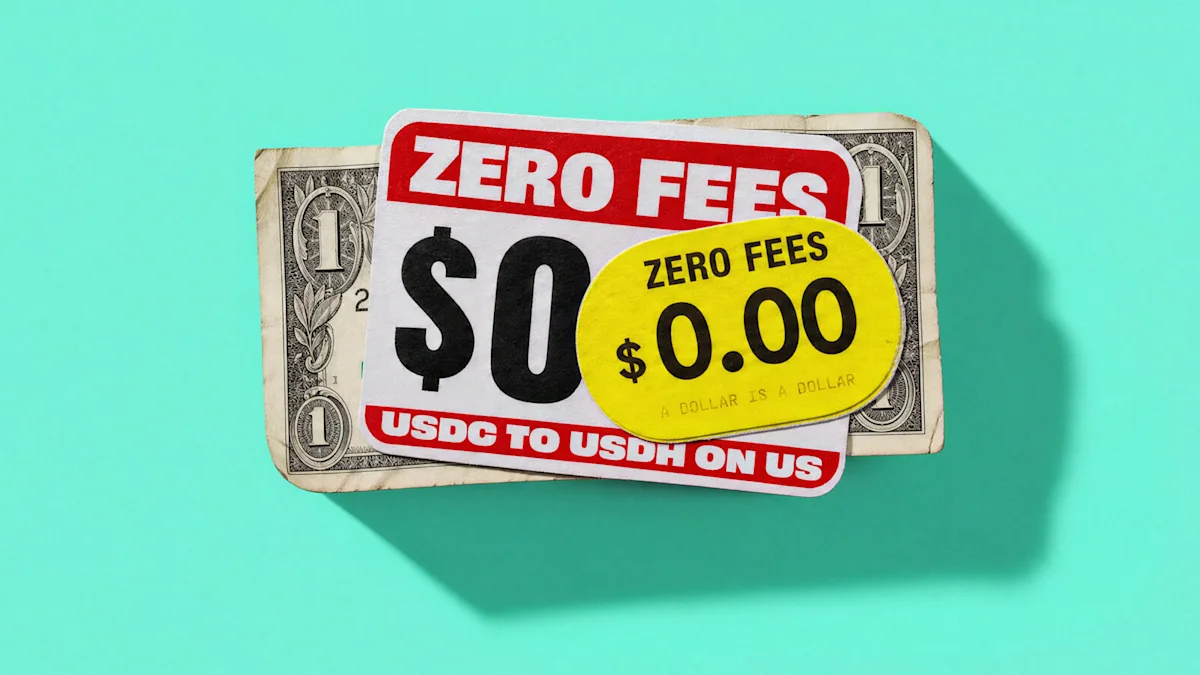
Across's first free stablecoin route, USDC into USDH on Hyperliquid, has been live since late 2025. The total fee on that route is zero. Send any amount up to $1M, receive the same amount on the other side. No fees, no slippage, no discount math, no "you'll get this minus our cut" disclaimers.
That's just one route. The list is growing. We're changing the standard.
The Direction of Travel
Across has processed $35 billion+ across all integrations and never lost user funds to a protocol-level failure. The case for charging users on top of that track record was always thin. The case for charging them when bridging itself is no longer expensive to operate is thinner.
Free bridging won't cover every route on day one. It probably never covers every route. Some routes will always involve enough capital cost or routing complexity that the economics don't pencil. But the trend line is clear. The high-volume corridors — stablecoin routes between major chains, the paths that move the most value for the most users — are moving toward zero. Once that floor is set, the user expectation resets with it.
A user who bridges USDC into USDH on Hyperliquid for free isn't going to pay 30 basis points to bridge USDC into USDC on a different chain six months from now. The new normal is contagious, and it's already becoming the new norm.
The infrastructure works in the background, the cost gets absorbed by the parties who benefit from the volume, and the user gets to do what they came onchain to do.
That's what free bridging means. And it's already started.
Bridge for free at across.to.